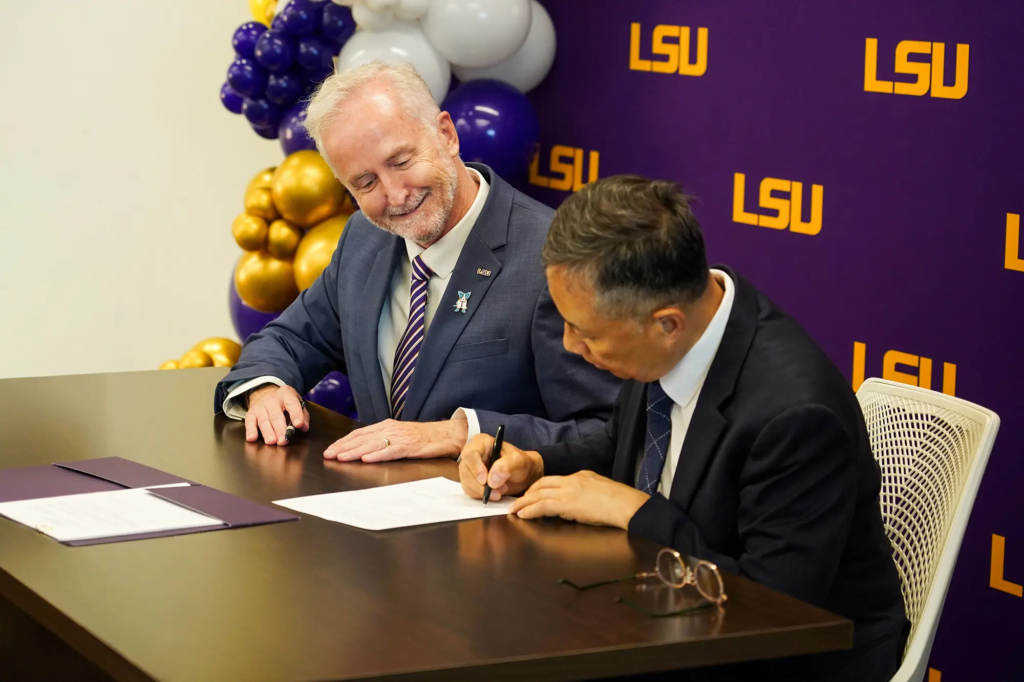
When LSU Chancellor James Dalton called the Hyundai Steel partnership “the most comprehensive industry agreement in LSU’s history,” he wasn’t exaggerating. The $5.8 billion Ascension Parish steel mill—one of the first fully integrated Electric Arc Furnace (EAF)-based steel plants in the U.S.—required a new model for university-corporate research collaboration. For corporate innovation leaders, this deal offers a blueprint for structuring long-term, scalable research partnerships that pre-negotiate IP, workforce, and commercialization terms before the first research dollar flows.
The Deal Structure: What Hyundai and LSU Built
The June 2026 Master Research Agreement covers sponsored research and jointly developed technology across metallurgy, materials science, energy, robotics, automation, and environmental engineering. Unlike traditional project-by-project agreements, this framework pre-addresses intellectual property ownership, publication rights, and talent exchange protocols—so individual projects can launch without additional negotiations.
For Hyundai, the partnership provides access to research infrastructure that would cost billions to replicate internally, including the Louisiana Light Source synchrotron (the South’s only synchrotron facility) and a $10 million scanning transmission electron microscope at the Advanced Microscopy and Analytical Core. For LSU, it creates long-term applied research opportunities connected to one of the largest industrial investments in Louisiana’s history. The agreement also establishes workforce pipelines, with LSU graduate students gaining internships and careers tied to Hyundai’s Louisiana operation and broader industrial network.
Critically, the MRA separates framework terms from funding commitments. No specific dollar amounts were committed in the master agreement itself—individual task orders will define project budgets. Chancellor Dalton has estimated the partnership could generate $50 million to $100 million in research flow to LSU over a 10-year period, but those figures remain subject to future negotiations.
The IP structure is particularly noteworthy: LSU retains ownership of fundamental research results, while Hyundai receives long-term usage rights and first option to license commercial inventions. Faculty maintain full freedom to publish—a condition LSU officials described as essential to preserving academic integrity while serving commercial objectives.
Robert Twilley, LSU’s vice president for research, framed the deal as a strategic response to shifting federal funding landscapes. “One of the most important pivots university research programs need to make is to build that connectivity with industry,” he said.
The Technical Stakes: Why This Partnership Matters
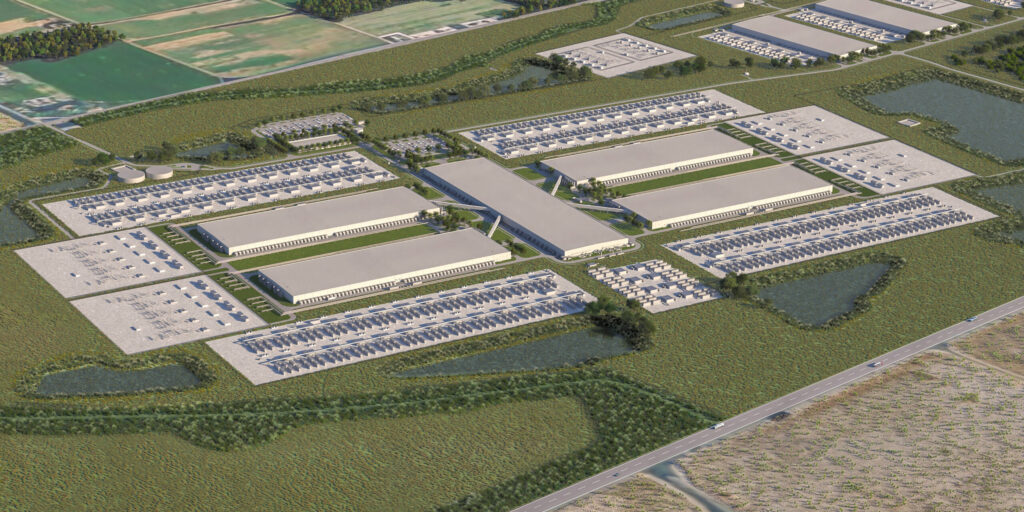
The research agenda directly serves Hyundai’s $5.8 billion manufacturing facility, which will produce automotive steel sheets for North American plants using a fundamentally different production process than traditional steelmaking.
Traditional blast furnace operations rely on iron ore, metallurgical coal, and coke, producing roughly 1.8 to 2.2 tons of CO₂ per ton of crude steel. Hyundai’s EAF configuration uses recycled steel scrap and Direct Reduced Iron (DRI), melting feedstock with high-voltage electric currents through graphite electrodes—bypassing coal combustion entirely. The approach reduces carbon intensity to 0.3 to 0.6 tons of CO₂ per ton of steel.
At the core of the facility is a Danieli-supplied ENERGIRON direct reduction plant—the second of its kind in the U.S.—with annual capacity of 2.5 million tonnes of hot and cold DRI. The system delivers DRI with 94% metallization and 2.5% carbon content, with hot DRI conveyed to the EAFs via the HYTEMP pneumatic transport system at temperatures exceeding 600°C. The infrastructure is hydrogen-ready, designed to substitute natural gas with green hydrogen as it becomes cost-effective, shifting the chemical byproduct from CO₂ to water vapor.
This technical context explains why LSU’s expertise in materials science, structural integrity, energy economics, and robotics maps directly to Hyundai’s R&D needs. The research partnership connects LSU’s graduate programs to what will be a 1,300-person manufacturing operation scheduled for completion in 2029.
The Regional Incentive Architecture
The Hyundai facility sits within a broader economic development ecosystem. The state, local governments, and Entergy Louisiana collectively offered incentives valued at approximately $2.6 billion over 30 years—including a $100 million state allocation for land purchase, up to $100 million in performance-based grants tied to capital investment milestones, and substantial local tax abatements through a Payment-In-Lieu-of-Taxes (PILOT) arrangement.
Entergy Louisiana provided a special industrial electricity tariff delivering an estimated $300 million-plus in benefits over a decade, providing the stable baseload power required for high-voltage EAF operations. The facility will be located on approximately 1,700 to 1,800 acres within the RiverPlex MegaPark in Ascension Parish.
These incentives have drawn scrutiny. At least 10 elected leaders signed nondisclosure agreements with Louisiana Economic Development during negotiations, and advocacy groups including the Louisiana Bucket Brigade and Rural Roots Louisiana have filed lawsuits challenging the deal’s transparency. Environmental groups, including the Sierra Club Delta Chapter, have pressured Hyundai to strengthen its air permit application—resulting in commitments to replace nine natural gas-fired industrial heaters with electric ones and add Selective Catalytic Reduction systems, projected to cut nitrogen oxide emissions by 500 tons per year and greenhouse gases by 22,000 tons annually.
Why It Matters for Corporate Innovation Leaders
This partnership model addresses three persistent pain points in corporate-university collaborations.
First, it eliminates negotiation friction. The pre-negotiated framework means IP terms, publication rights, and data-sharing protocols are established once. Rather than managing dozens of separate agreements with different terms, a master agreement creates consistency and reduces transaction costs. This model scales effectively for corporations seeking research partnerships across multiple universities.
Second, it integrates workforce development with research objectives. The pipeline of talent is often as valuable as the research outputs. LSU’s partnership layers graduate-level research on top of technician-level training already underway at River Parishes Community College and through Louisiana Economic Development’s FastStart program—creating a tiered educational architecture from vocational certifications through doctoral research.
Third, it aligns commercialization pathways before research begins. Hyundai brought “problems that are 10 years ahead” to LSU, allowing the university to focus on fundamental research with commercial potential rather than applied consulting. As Greg Trahan, LSU’s assistant vice chancellor for research partnerships, put it: “Hyundai comes and says, ‘I would like to make a material that has these properties.’ LSU has an opportunity to work on that directly with Hyundai, including our students.”
What to Do Next
Corporate innovation leaders can apply three principles from this deal to their own partnership strategies:
Negotiate the framework before the research. Establish IP, publication, and talent terms upfront rather than project-by-project. The LSU-Hyundai MRA demonstrates that pre-negotiating these terms doesn’t require committing specific budgets—framework and funding can operate on separate tracks.
Integrate workforce development into research agreements. The most durable university-industry partnerships connect R&D pipelines to talent pipelines. This integration multiplies partnership value beyond research outputs and creates mutual dependencies that sustain collaboration over decades.
Align partnership structure with long-term strategic objectives. The Hyundai facility will operate for decades. The MRA was designed to match that timeline, positioning LSU as an ongoing extension of Hyundai’s internal R&D capabilities rather than a vendor for discrete projects.
Key Takeaways
- Master agreements pre-negotiate IP, publication, and talent terms for scalable partnerships
- Workforce pipeline integration multiplies partnership value beyond research outputs
- Framework-first approaches reduce transaction costs and accelerate collaboration speed
- Industry-funded research is becoming essential as federal funding fluctuates
Frequently Asked Questions
How long did the LSU-Hyundai Steel negotiation take?
The Master Research Agreement was announced in June 2026, but the partnership reflects years of relationship building. The MRA structure means individual research projects can launch immediately once the framework is established—without separate legal negotiations for each new initiative.
What IP terms are typical in master research agreements?
Master agreements typically establish background IP ownership (each party retains pre-existing IP), foreground IP allocation (new inventions), and commercialization rights. The LSU-Hyundai deal keeps research ownership with the university while granting the corporate partner licensing priority—balancing academic freedom with commercial incentives.
Can smaller companies use this partnership model?
Yes. While the LSU-Hyundai deal involves a $5.8 billion investment, the master agreement structure scales to companies of any size. Smaller firms can establish similar frameworks with universities, though workforce components and research scope may be more limited.